
The Sound That Gets Your Attention
You hit the opener button on a cool October morning, coffee in hand, and the door groans its way up like it's waking up from hibernation. Maybe there's a grinding squeal at the top of the track, or a metallic shriek every time the rollers pass a certain spot. You tell yourself you'll deal with it later. Then it happens again the next morning, a little louder.
That sound is almost always a lubrication problem, not a broken-door problem — at least not yet. Lynchburg's mix of humid summers, heavy rain, and pollen means a lot of grit, pollen film, and moisture work their way into garage door hardware over the course of a year. Add in the first cold snaps of fall tightening up metal parts, and squeaks that were barely noticeable in July suddenly become impossible to ignore in October.
Here's how to actually fix it, what to use, what to avoid, and where the line is between a weekend project and a job for a technician.
Tools and Supplies You'll Need
- A silicone-based garage door lubricant spray (not WD-40, more on that below)
- A clean microfiber cloth or shop rag
- A soft-bristle brush (an old toothbrush works for tight spots)
- A step stool or short ladder
- Work gloves
- Safety glasses, since you'll be working overhead
Step-by-Step: How to Lubricate a Garage Door Properly
- Disconnect the opener first. Pull the manual release cord so you're working the door by hand, not with power running to it. This keeps the door from engaging mid-task.
- Open the door fully and wipe down the tracks. Use a dry rag to remove dust, pollen residue, and any caked-on grime from the vertical and horizontal tracks. Do not lubricate the tracks themselves — rollers should glide on clean metal, not a slick coating, or you'll attract more dirt.
- Lubricate the rollers. Spray a light coat of silicone lubricant directly onto each roller where it meets the stem, not into the track. Work the door up and down a few times by hand to let it work in.
- Lubricate the hinges. Spray each hinge where the two metal plates pivot. If a hinge is visibly worn or wobbly, note it — that's a sign it may need replacing, not just oiling.
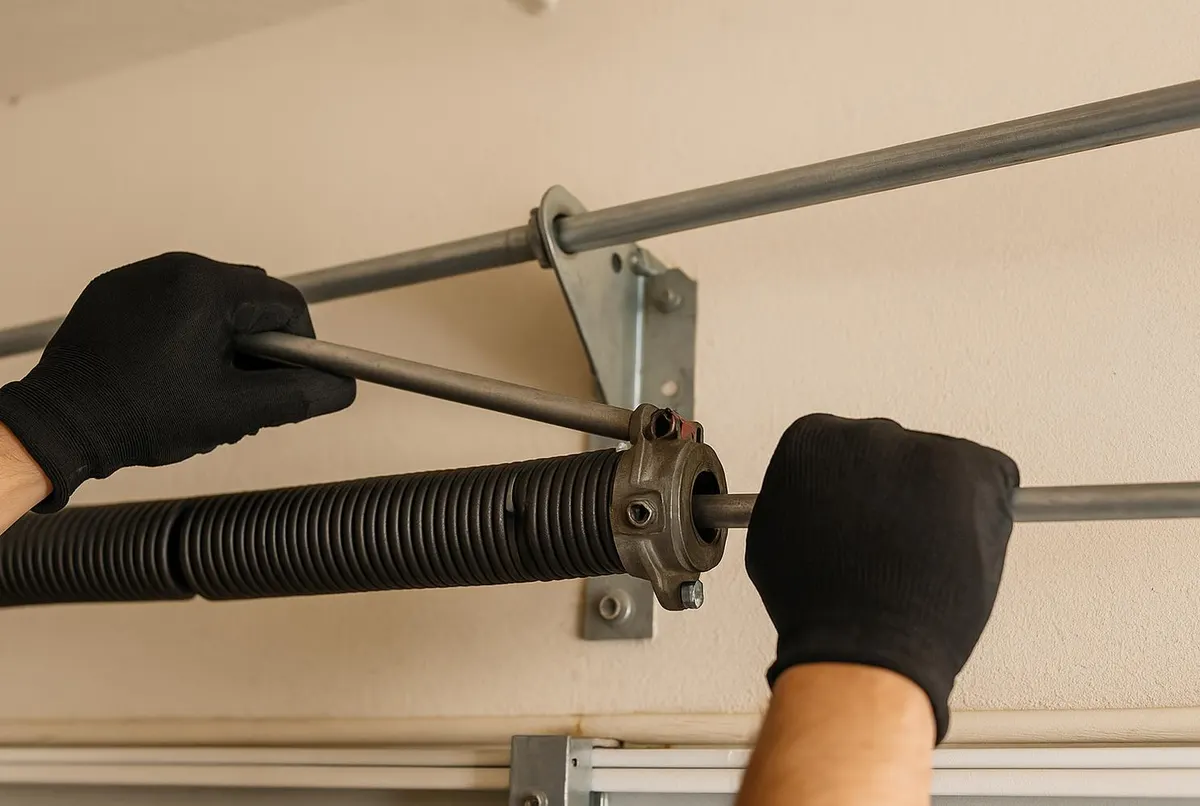
- Lubricate the springs — carefully. A light coat of lubricant on the torsion spring(s) above the door helps reduce friction and rust, which matters given how much moisture sits in the air here. Spray lightly and wipe off excess; springs under tension are not something to handle beyond this surface-level step.
- Lubricate the top rail and the opener's drive mechanism. If you have a chain-drive opener, a thin coat of lubricant on the chain helps. Belt-drive openers should not be lubricated at all — it can damage the belt material.
- Check the weatherstripping and seals. While you're down there, look at the bottom seal and side weatherstripping. These don't get lubricated, but pine sap, pollen, and moisture tend to build up on them in this area and can make the door stick slightly as it closes.
- Reconnect the opener and test the door. Run it up and down two or three times, listening for the squeak. If it's gone, you're done. If it's isolated to one spot you didn't treat, go back and address it directly rather than spraying everything again.
Products to Use — and the Ones to Avoid
Use a silicone-based garage door lubricant or a lithium grease made specifically for garage door hardware. Both hold up well in heat and don't wash out easily when humidity is high or after a heavy rain blows sideways into the garage opening.
Avoid WD-40 for this job. It's a solvent and penetrant, not a true lubricant — it displaces moisture short-term but evaporates quickly and actually attracts dust and pollen once it dries, which makes the squeak come back faster and leaves a gummy residue on rollers and hinges.
Avoid standard motor oil or household 3-in-1 oil as well. They're too thin, drip onto the garage floor, and don't hold up to the temperature swings between a hot July afternoon and a frosty morning after an ice storm.
What's Safe for a Homeowner vs. What Needs a Technician
Lubricating rollers, hinges, the opener chain, and the outside of springs is a reasonable DIY task if you're comfortable on a step stool and follow the steps above. It takes maybe twenty minutes and should be done roughly twice a year — once in spring after pollen season and once in fall before winter settles in.
What's not a DIY job: adjusting spring tension, replacing a spring, realigning bent track, or working on anything where the door is off-balance or binding. If the door still squeaks after lubrication, or if you notice the door is heavier on one side, slamming shut, or reversing unexpectedly, that points to a mechanical issue lubricant won't solve — and working on a torsion spring under tension without training is genuinely dangerous.
When to Call Lynchburg Door & Opener
If you've lubricated everything correctly and the noise persists, or if you notice rust forming faster than usual on hardware (common after a wet summer), it's worth having it looked at before winter. Our Garage Door Maintenance service covers a full inspection of springs, cables, rollers, and the opener system, catching the kind of wear that a spray can't fix. If the issue turns out to be the opener itself — stripped gears, a failing chain, or a motor that's struggling — our Garage Door Opener Repair & Installation team can handle it the same visit in most cases.
If your garage door is making noise, sticking, or just feels harder to lift than it used to, give Lynchburg Door & Opener a call. We serve Lynchburg, Tullahoma, Shelbyville, Fayetteville, Winchester, Manchester, Mulberry, and Normandy, and we're ready to get your door running quietly again before the cold really sets in.